
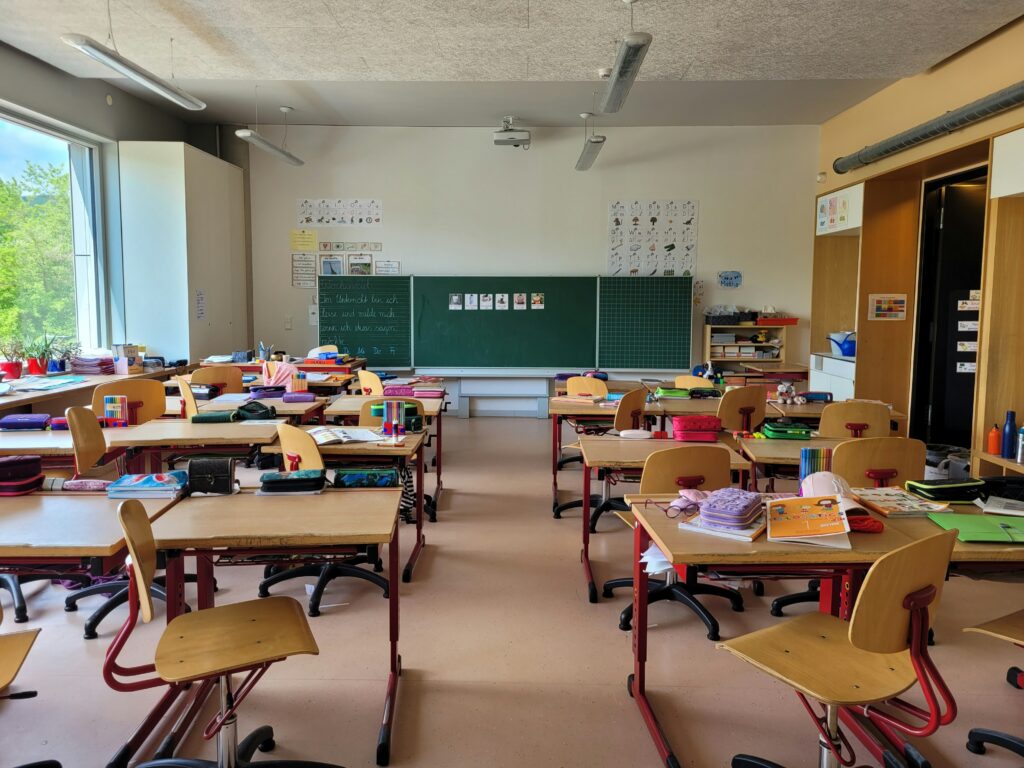

Germany offers a compelling model of how a national school system can interplay with technological readiness and workforce development. This blog explores how the German school system is structured, why Germany performs strongly in technology, and what lessons other countries (or education systems) might draw from this.
1. Structure of the German School System
1.1 Compulsory education & governance
School attendance in Germany is compulsory. Children must attend school for a minimum number of years as defined by each federal state (Bundesland). Goethe-Institut+2zfl.uni-koeln.de+2
Governance is decentralised: the 16 federal states have primary responsibility for school organisation — meaning there can be significant variation between states (for example in how many years primary school lasts). zfl.uni-koeln.de+1
1.2 Key stages: from primary to secondary
-
Grundschule (Primary School): Usually starts at age 6 and runs for four years in many states (grades 1-4), though some states have variants up to grade 6. cbs.de+1
-
Secondary Schools: After primary, students transition into different paths of secondary education. According to one guide: cbs.de+1
-
Hauptschule: A path oriented more toward practical subjects/trades, lower academic intensity. cbs.de+1
-
Realschule: A middle track, offering more general education, enabling either vocational qualification or further academic progression. cbs.de+1
-
Gymnasium: The most academically oriented track, preparing students for university, culminating in the Abitur (all-gemeine Hochschulreife) — the general university entrance qualification. IamExpat in Germany+1
-
Gesamtschule (Comprehensive School): Some states offer integrated schools combining pathways, enabling more flexibility for students to shift between tracks. cbs.de
-
1.3 Vocational training and the “dual system”
One of Germany’s distinguishing features is the strong link between secondary education and vocational pathways. The “dual system” (vocational training in a company + vocational school) stands out. bibb.de
-
Apprentices are employed by a company and attend vocational school, typically for 2-3½ years depending on the profession. bibb.de+1
-
In 2022, for example, about 468,900 new apprenticeship contracts were concluded in Germany. Destatis
-
The benefits of apprenticeship training for early labour market outcomes have been empirically established. iza.org
1.4 Observations & caveats
-
Because each state sets many rules (exams, grade spans, school types), the system can be complex and inconsistent across states. zfl.uni-koeln.de+1
-
The tracking of students into different school types early (after grade 4 in many cases) has been subject to criticism for potentially limiting mobility. Reddit+1
2. Germany’s Technological Strength & Education Link
2.1 National digital strategy & infrastructure
Germany has recognised that digital skills and education must go hand in hand with technology readiness. Some key elements:
-
The national DigitalPakt Schule (Digital Compact for Schools) ensures fast internet and digital infrastructure to roughly 43,000 schools. Bundesregierung+1
-
The Digital Strategy 2025 outlines a target that by 2025 every school pupil will have basic knowledge in information science, algorithms and programming; and that digital infrastructure in education will be at leading levels. Digital Skills and Jobs Platform+1
-
Funding: Around €1.3 billion in investment to strengthen digital education via a national platform plus teacher digital training centres. UNESCO
-
Yet, gaps remain: as of recent data, about 49 % of the German population has only basic digital skills — below the EU target. Initiative D21+1
2.2 Vocational system + strong industry linkage
The dual system links formal education with industry needs — apprentices train in real companies, learn practical skills, and are paid. This creates a workforce that’s more smoothly transitionable to technology-rich industries. bibb.de+1
The process of updating vocational training to align with evolving technological, environmental and social demands is ongoing: e.g., in 2025, seven updated vocational apprenticeship occupations came into effect. CEDEFOP
2.3 Results & outcomes
-
Germany’s ICT specialist employment share is slightly above the EU average (~5.3 %) as of recent data. Digital Skills and Jobs Platform
-
The vocational training returns for early labour-market outcomes are strong: e.g., apprenticeship graduates are less likely to be unemployed around age 25, according to research. iza.org
3. What Others Can Learn From Germany
Germany’s experience holds lessons for education systems and technology strategy elsewhere. Here are some key take-aways.
3.1 Flexible pathways & multiple routes
Rather than a single university-only route, Germany offers multiple pathways: academic (Gymnasium → university) and vocational (Hauptschule/Realschule → apprenticeship/dual system) with opportunities to change tracks. That flexibility helps accommodate diverse student strengths and interests.
When other systems force everyone into a single path (often university), many students may feel left out or mismatched to their aptitudes.
3.2 Strong vocational link to industry
The dual system ensures that students gain real-world, industry-relevant skills — which enhances employability and responsiveness to technology changes. Adopting models where vocational training is taken seriously and linked with industry can reduce mismatch between education output and labour-market needs.
3.3 Early digital skills & infrastructure investment
Germany’s strategy to embed algorithmic thinking, programming and information science early is a model. For any country that wants to build its technology workforce and digital economy, focusing on digital literacy early (not merely as an optional “computer class”) is essential.
Equally important is infrastructure: devices, networks, teacher preparation. Without these, simply saying “teach coding” won’t work. Germany’s massive investment underscores this.
3.4 Ecosystem approach: research, education, industry
Germany doesn’t treat education and technology in silos. Vocational training, higher education, research institutes, start-ups and industry form an interconnected ecosystem. This ensures feedback loops: industry needs inform curricula; research informs practice; education supplies talent.
Other contexts should aim for similar coherence rather than disconnected interventions.
3.5 Continuous updating & adaptation
Germany’s ongoing reforms of vocational training (e.g., 2025 updates) show the system is responsive to change. In fast-moving technology fields, this adaptability is critical. Education systems need mechanisms for regular updating rather than static curricula.
4. Challenges Germany Faces (and which others should anticipate)
While Germany’s model has many strengths, it is not without challenges — which others should keep in mind.
-
Early tracking into school types (Hauptschule/Realschule/Gymnasium) can limit flexibility and perpetuate social stratification. Some voices criticize this part of the system for being rigid. Reddit
-
Digital skills among the overall population still lag behind targets: only ~49 % have basic digital skills according to one measure. Initiative D21+1
-
Variation between states means equity issues: rural vs urban, rich vs poorer states can differ in infrastructure and outcomes.
-
Infrastructure investment is high but keeping up with technology change is a moving target. Teacher training and results-based evaluation remain important.
5. Summary & Conclusion
The German school system is characterised by a structured, multi-track model (primary → multiple secondary types → university or vocational) with strong linkages to industry via vocational training. It complements this with a national digital strategy, significant investment in infrastructure and digital education, and ongoing adaptation to labour-market needs. These elements help explain Germany’s technological readiness and its ability to supply skilled workers into technology sectors.
For other countries and stakeholders in education and technology, the lessons are: diversify pathways to recognise different learner strengths; build deep ties between education and industry; invest early and seriously in digital skills and infrastructure; adopt an ecosystem view (education + research + industry) rather than working in silos; and keep adapting. At the same time, it is wise to be aware of potential pitfalls: equity issues in tracking, the challenge of large-scale infrastructure and teacher up-skilling, and ensuring broad access to digital skills rather than focusing only on elite segments.
In short, Germany offers a powerful case study of how schooling, vocational training and technology strategy can be aligned — and from it we can draw meaningful lessons for building future-ready education systems.