
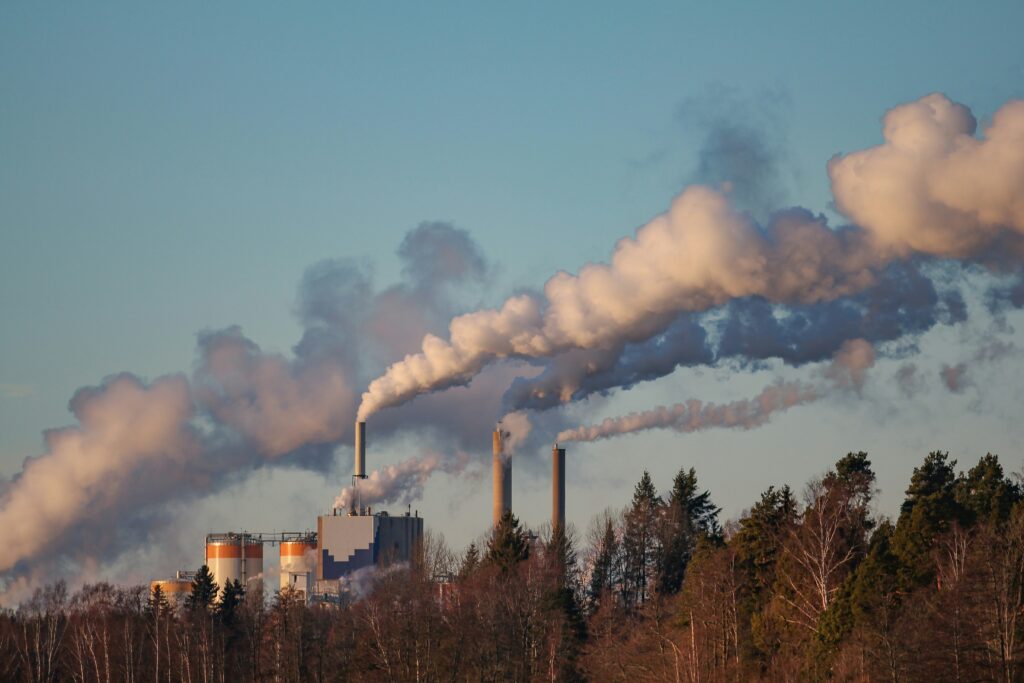
Air pollution is not just an environmental problem — it’s a public‐health, economic, urban-planning and climate challenge all in one. In India, many cities are breathing some of the world’s worst air, yet there are also places that are doing better. Understanding why it’s bad, how to fix it, and where the contrast lies gives a roadmap for change.
Why India’s Air Quality Is a Crisis
Here are 20 of the major causes behind India’s poor air quality, many backed by research and data.
-
Vehicular emissions – Cities have huge numbers of cars, two-wheelers, buses and trucks. Emissions of NO₂, CO, PM₂.₅ and PM₁₀ from these sources contribute significantly.
-
Industrial emissions – Factories, power plants (especially coal-fired) emit sulphur dioxide, nitrogen oxides, particulates and other pollutants.
-
Construction & demolition dust – Rapid urbanisation means many sites, generating large amounts of dust (PM₁₀/PM₂.₅).
-
Agricultural residue burning (stubble burning) – In northern India (Punjab, Haryana, etc) farmers burn crop residue, which sends plumes of fine particulate matter across the plains.
-
Domestic biomass/solid-fuel use – In many rural/peri-urban homes, wood, dung, crop waste are used for cooking/heating, leading to indoor and outdoor pollution.
-
Open waste burning and landfill fires – Unsegregated waste, plastics, organic garbage burnt openly release toxic fumes and particulates.
-
Road dust and re-suspension – Unpaved roads, lack of periodic cleaning, heavy traffic stir up dust that becomes airborne PM.
-
Poor fuel quality / older vehicle stock – Degraded fuel, older engines, non-compliant vehicles raise emission levels.
-
Geography & meteorology – For example, the Indo-Gangetic Plain during winter has temperature inversions, low wind speeds which trap pollutants near surface.
-
High population density & urban sprawl – More people = more energy demand, more vehicles, more waste, more potential for emissions.
-
Insufficient public transport / reliance on private vehicles – When public system is weak, private vehicle use ramps up.
-
Coal dominance for power generation and heating – Coal is still a major power source, especially in older plants with less efficient pollution control.
-
Festivals, fireworks and seasonal spikes – E.g., fireworks during Diwali generate sharp short-term spikes in PM₂.₅ and other pollutants.
-
Cross-border or regional pollutant transport – Pollution doesn’t stay local; transport from neighbouring states and regions adds to local loads.
-
Weak enforcement of regulation & monitoring – There are laws/regulations but compliance, monitoring and enforcement are uneven.
-
Lack of green cover / vegetation in urban areas – Trees and green belts help absorb particulates and improve dispersion; many cities lack adequate urban forestry.
-
Diesel generators, backup power sets – In places with unreliable electricity, diesel gensets add to local pollution load.
-
Brick kilns, small-scale informal industries – These often operate with low-efficiency equipment and high emissions.
-
Urban heat island & building geometry – Tall buildings, narrow streets, heat retention hinder pollutant dispersal.
-
Economic/infrastructure constraints & legacy systems – Many cities are expanding faster than infrastructure upgrades; old systems remain.
Supporting data
-
The charity Clean Air Fund reports that of the world’s 30 cities with the worst air pollution, 17 are in India. Clean Air Fund
-
According to IQAir real-time data, India’s national AQI on one day in Nov 2025 reached “Unhealthy” levels with PM₂.₅ ~103 µg/m³, PM₁₀ ~139 µg/m³. AQI
-
A ranking shows India had 84 of the world’s 100 most-air-polluted cities. Progressive Policy Institute
What Can Be Done: 20 Actionable Solutions
Here are 20 practical solutions — many already being discussed or implemented — to help improve air quality in India.
-
Accelerate transition to electric vehicles (EVs) – Subsidies, charging infrastructure, phase-out of older/high-emitting vehicles.
-
Shift power generation to cleaner fuels – Increase solar, wind, hydro; retrofit coal plants with better controls.
-
Regulate crop‐residue burning & promote alternatives – Incentivise farmers to use machinery (e.g., “Happy Seeder”), or to manage residue differently.
-
Ban or strictly enforce open waste burning – Stronger regulation + better municipal waste-management + segregation at source.
-
Promote efficient biomass/clean cooking solutions – Encourage LPG, electric stoves, biogas in rural and peri-urban homes.
-
Dust control in construction & roads – Require dust suppression (water-sprinkling), coverings on construction sites; pave/unpaved roads cleaned regularly.
-
Expand and improve public transport & non-motorised transport – Metro, buses, dedicated bike lanes, pedestrian zones.
-
Strengthen emissions standards & enforce them – For vehicles (e.g., BS-VI), industries, DG sets, brick kilns.
-
Increase urban green cover & tree planting – Urban forests, green belts act as pollutant sinks and improve dispersion.
-
Promote compact, well-planned urban development – Better zoning, less congestion, more open space, ventilation corridors.
-
Regional coordination of pollution control – States collaborate on issues like stubble burning, shared air-sheds, cross‐border transport.
-
Real‐time sensors and air quality monitoring network – More stations, open data transparency, public alerts.
-
Retrofitting / upgrading of existing industries – Install scrubbers, electrostatic precipitators, better filters.
-
Replace diesel generators / backup sets with cleaner alternatives – Solar + battery backups, grid reliability improvements.
-
Behavioural & awareness campaigns – Inform citizens about indoor & outdoor air pollution, promote clean habits (no leaf/forest/field burning, no open fires).
-
Fiscal instruments & incentives – Congestion charges, low-emission zones, vehicle scrappage schemes, tax breaks for clean tech.
-
Strengthen waste management & circular economy – Segregation, recycling, reducing plastics, capturing methane from landfills.
-
Urban heat island mitigation – Cool roofs, green roofs, reflective surfaces, more vegetation to reduce heat/stagnant air.
-
Promote energy efficiency in buildings and appliances – Less energy = less generation pollution.
-
Focus on vulnerable populations & health links – Provide clean indoor air programmes, protect children/elderly, integrate with health policy.
The Worst & Best Cities: A Tale of Two Contrasts
🚫 Worst: New Delhi (India’s capital)
-
New Delhi is repeatedly cited among the most polluted capitals globally. Clean Air Fund+1
-
Average PM₂.₅ levels in some studies show far-above the safe limits. For example, one list of “20 Most Polluted Cities in India” places New Delhi at the top with ~78.7 µg/m³ average. Smart Air
-
The city faces a combination of local sources (traffic, industries, construction) plus regional inputs (stubble burning, dust) and unfavourable meteorology (winter inversions). Wikipedia+1
-
The impact: poor air quality affects visibility, respiratory & cardiovascular health, worker productivity, life expectancy.
✅ Best (Cleaner) Example: Pune (Maharashtra)
-
According to a recent list of “Cleanest Cities in India by AQI (2025)”, Pune registers an AQI of 51 (in the “Satisfactory” category), the lowest among large Indian cities listed. Jagranjosh.com
-
The favourable factors: geography (near Western Ghats, better wind dispersion), fewer heavy polluting industries compared to some metros, better urban planning and waste management as per article. Jagranjosh.com
-
While “best” doesn’t mean “clean by international standards”, it offers a model of how cities can manage the challenge.
Why these Contrasts Matter
-
They show that context matters: geography, local policies, economic structure all influence air quality.
-
They show that improvement is possible: if a large city like Pune can do better, others have pathways.
-
They offer lessons: adopt what works (e.g., public transport, waste management, regional coordination) and avoid the pitfalls (e.g., unchecked industry + poor planning + bad meteorology).
How India Can Move Forward: Summary & Key Take-aways
-
Realistic targets: Set city‐specific action plans (in line with the National Clean Air Programme (NCAP), which covers many non-attainment cities).
-
Integrated approach: Air quality isn’t just one sector’s job — it involves transport, industry, agriculture, urban planning, health.
-
Data & accountability: Real-time monitoring, open data, citizen awareness, local accountability.
-
Region-wide thinking: Air pollution doesn’t respect administrative boundaries — north India’s smog is often from wider region.
-
Citizen role: Behaviour matters (choice of transport, waste, energy use).
-
Economic logic: Cleaner air → healthier population → higher productivity → economic gains. As one source notes: If India had achieved safe air quality levels in 2019 the GDP would have been higher by ~$95 billion. Clean Air Fund
Final Thoughts
The fact is: India’s air-quality challenge is tough, but it is addressable. By combining 20 targeted solutions with city‐level action, regional coordination, and citizen involvement, we can move from crisis to improvement. The worst-air cities show us how bad things can get; the better-air cities show us what improvement looks like. What’s needed now is scale, consistency, political will and public engagement.
Cleaner air is not a luxury — it’s a necessity for health, growth and sustainability. Each policy, each innovation, each individual decision counts.
References
-
“Air pollution in India” — Clean Air Fund. Clean Air Fund
-
“India Air Quality Index (AQI) and Air Pollution information” — IQAir. IQAir
-
“India’s 20 Most Polluted Cities for Air Quality (2024 AQI Rankings)” — Smart Air Filters blog. Smart Air
-
“List of Cleanest Cities in India by Air Quality Index (2025)” — Jagran Josh article. Jagranjosh.com
-
“Air pollution in India” — Wikipedia summary (for broad context). Wikipedia