
Why Japan’s Elections Set a Global Example for Fairness and Integrity
Introduction
In an age where democracy is constantly being tested across the world, Japan stands out as a beacon of political stability and transparency. The country’s electoral process, refined over decades, is admired globally for its integrity, fairness, and efficiency. Despite occasional criticisms, Japan’s elections are conducted with remarkable discipline and public trust — a reflection of both its strong legal framework and deeply ingrained civic responsibility.
This article explores how Japan conducts its elections, the systems in place to ensure fairness, and why the nation’s democratic process is often viewed as a global example.
1. A Brief History of Japan’s Democratic Evolution
Japan’s path to democracy began in the late 19th century with the Meiji Constitution of 1889, which introduced the first parliamentary system in Asia. However, it wasn’t until after World War II, under the 1947 Constitution of Japan, that the nation fully embraced democracy. This new constitution guaranteed universal suffrage, civil rights, and a system of government accountable to the people.
Since then, Japan has held free and fair elections regularly, with a consistent voter turnout averaging between 50% and 70% in national polls. Over the years, Japan’s system has evolved to ensure transparency, prevent corruption, and maintain political stability — making it one of the most trusted democracies in Asia.
2. The Structure of Japan’s Government
Japan operates under a parliamentary democracy within a constitutional monarchy. The Emperor serves as the ceremonial head of state, while actual political power lies with the National Diet, the country’s bicameral legislature.
The Diet has two houses:
-
House of Representatives (Shūgiin):
The lower house, with 465 members elected for four years. -
House of Councillors (Sangiin):
The upper house, with 248 members serving six-year terms, half of whom are elected every three years.
Both houses play vital roles in lawmaking, national budgets, and selecting the Prime Minister. These bodies are the foundation of Japan’s democratic process, and their members are directly chosen by citizens through regular elections.
3. How Japan Conducts Its Elections
3.1 National Elections
Japan’s House of Representatives uses a mixed electoral system:
-
289 members are elected from single-member districts using a first-past-the-post system.
-
176 are chosen through proportional representation, divided among 11 regional blocks.
Voters cast two ballots — one for a local candidate and one for a political party. This hybrid system ensures a balance between local representation and proportional national influence.
For the House of Councillors, half of its seats are contested every three years:
-
148 members are elected from prefectural constituencies.
-
100 members are elected by proportional representation nationwide.
This staggered approach provides political continuity and prevents sudden shifts in governance.
3.2 Local Elections
Japan’s democracy extends beyond the national level. Each of the 47 prefectures and more than 1,700 municipalities holds elections for:
-
Governors and mayors,
-
Local assemblies, and
-
Other administrative roles.
These elections usually occur every four years and ensure that local governance remains accountable to residents.
A notable event is the Unified Local Elections (Tōitsu Chihō Senkyo) held every four years in many areas simultaneously — improving voter participation and efficiency.
4. Voting Procedures: Precision and Discipline
Japan’s voting process is known for its simplicity, organization, and honesty.
-
Eligibility:
Every Japanese citizen aged 18 or older can vote. (The age was lowered from 20 to 18 in 2016.) -
Voting Method:
Voters receive a blank ballot on which they handwrite the candidate’s name. For proportional representation, they write the party name instead. This handwritten method reduces manipulation and errors caused by electronic systems. -
Polling Stations:
Managed by local election management committees, polling stations open from 7 a.m. to 8 p.m. on election day. -
Early and Absentee Voting:
Japan introduced early voting (期日前投票) in 2003, allowing citizens unable to vote on election day to cast ballots in advance — a move that has significantly increased accessibility. -
Counting and Transparency:
Ballots are manually counted under the supervision of multiple officials and observers from various political parties. The results are announced publicly, ensuring transparency and accountability.
5. The Legal Framework and Election Management
Japan’s elections are governed by the Public Offices Election Law (1950), a comprehensive framework that strictly regulates campaign practices, funding, and election conduct.
Key aspects include:
-
Election Management Committees at every administrative level to oversee voting and counting.
-
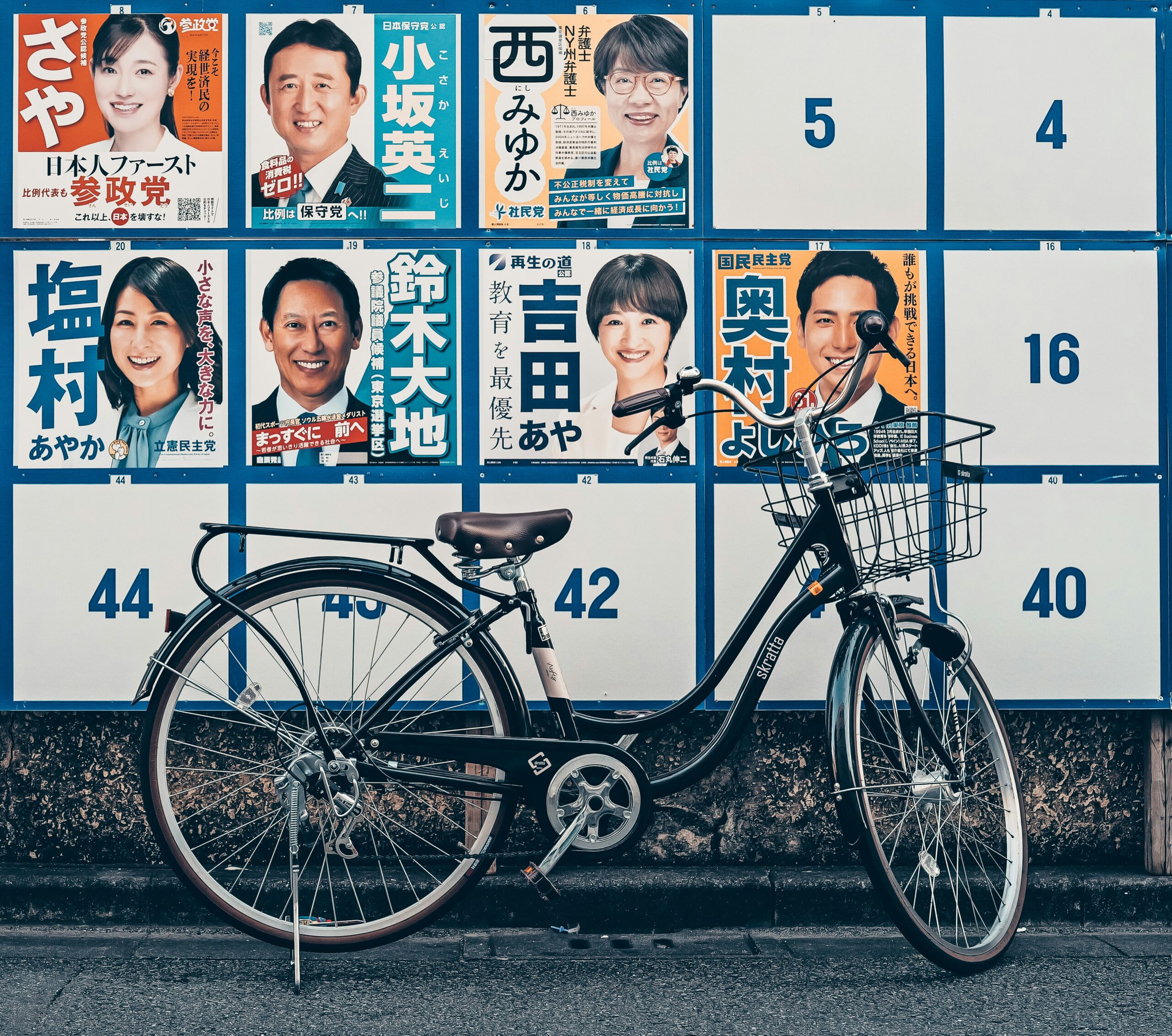
Limits on campaign spending, posters, and advertisements to maintain equality among candidates.
-
Mandatory reporting of political donations, ensuring that money doesn’t dominate politics.
-
Prohibition of negative campaigning or false statements about opponents — protecting public trust.
Violations of election laws can result in criminal penalties, including imprisonment or disqualification, reinforcing Japan’s zero-tolerance policy toward electoral misconduct.
6. Campaigning Rules: A Model of Discipline
Unlike many democracies where campaign seasons are long and noisy, Japan maintains strict control over campaign activities:
-
The official campaign period lasts only 12 days for the House of Representatives and 17 days for the House of Councillors.
-
Loudspeakers, posters, and limited door-to-door campaigning are allowed — but each activity is regulated.
-
Political parties and candidates rely heavily on manifestos, debates, and televised speeches rather than personal attacks.
This limited period ensures that elections are focused on policies, not personalities — and prevents the overwhelming influence of wealth and media exposure.
7. Role of Technology and Modern Reforms
While Japan prefers handwritten ballots for accuracy, technology still plays a role in ensuring efficiency:
-
Computerized counting verification and real-time updates are used in major cities.
-
Online political advertisements are regulated but permitted, increasing youth engagement.
-
Discussions continue about introducing digital voting systems, though public preference remains with paper ballots due to security and transparency concerns.
8. Public Trust and Voter Behavior
One of the most striking features of Japan’s democracy is the high level of public trust.
According to surveys by the International Institute for Democracy and Electoral Assistance (IDEA), over 70% of Japanese citizens believe their elections are fair and transparent.
Japan also demonstrates remarkably low rates of electoral fraud. Incidents of vote tampering or corruption are exceedingly rare and, when they occur, are swiftly investigated and prosecuted.
However, voter turnout — especially among younger citizens — remains a challenge. The turnout for the 2021 general election was about 55%, one of the lowest in recent decades. Authorities are working to promote civic education and digital outreach to re-engage younger voters.
9. Challenges and Criticisms
Even with a strong reputation, Japan’s elections face some criticisms:
-
Rural Vote Disparity:
The population imbalance between rural and urban districts means rural votes can carry more weight. The Supreme Court has ruled several elections as being in a “state of unconstitutionality,” pushing the government to redraw district boundaries periodically. -
Dominance of the Liberal Democratic Party (LDP):
The LDP has ruled Japan almost continuously since 1955. While this reflects voter preference, critics argue it limits political competition. -
Limited Female Representation:
Despite progress, women still hold only around 10–15% of seats in the Diet — a figure lower than most developed democracies.
Despite these issues, Japan’s electoral integrity remains strong, thanks to its legal checks and a vigilant public.
10. Why Japan’s Elections Are Among the Fairest in the World
Several factors explain why Japan is admired globally for its fair and clean elections:
-
Independent Oversight:
Election management bodies operate separately from political influence. -
Strict Laws and Enforcement:
The Public Offices Election Law ensures discipline and transparency. -
Cultural Respect for Rules:
Japanese society values honesty and order, discouraging corruption. -
Transparency and Manual Counting:
Every vote is counted manually and verified publicly. -
Low Campaign Spending:
Equal opportunity for all candidates regardless of wealth.
Together, these factors make Japan’s electoral system a benchmark of democratic integrity — admired not only in Asia but worldwide.
11. International Recognition
Global democracy indices consistently rate Japan highly:
-
The Economist Intelligence Unit (2024) ranked Japan as a “Full Democracy,” placing it among the top 20 nations globally.
-
Transparency International’s Corruption Perceptions Index also places Japan among the world’s least corrupt countries.
-
Election monitoring groups often cite Japan’s discipline, fairness, and civic responsibility as models for developing democracies.
Conclusion
Japan’s elections represent more than just a political process — they are a reflection of the nation’s values: discipline, fairness, and respect for democracy. From the meticulous organization of polling stations to the cultural rejection of corruption, Japan’s electoral system sets a global standard for fairness and integrity.
Despite challenges such as voter disparity and low youth participation, Japan continues to refine its democratic process. In a world where electoral systems are often marred by controversy, Japan stands as proof that democracy, when guided by ethics and public trust, can truly thrive.