
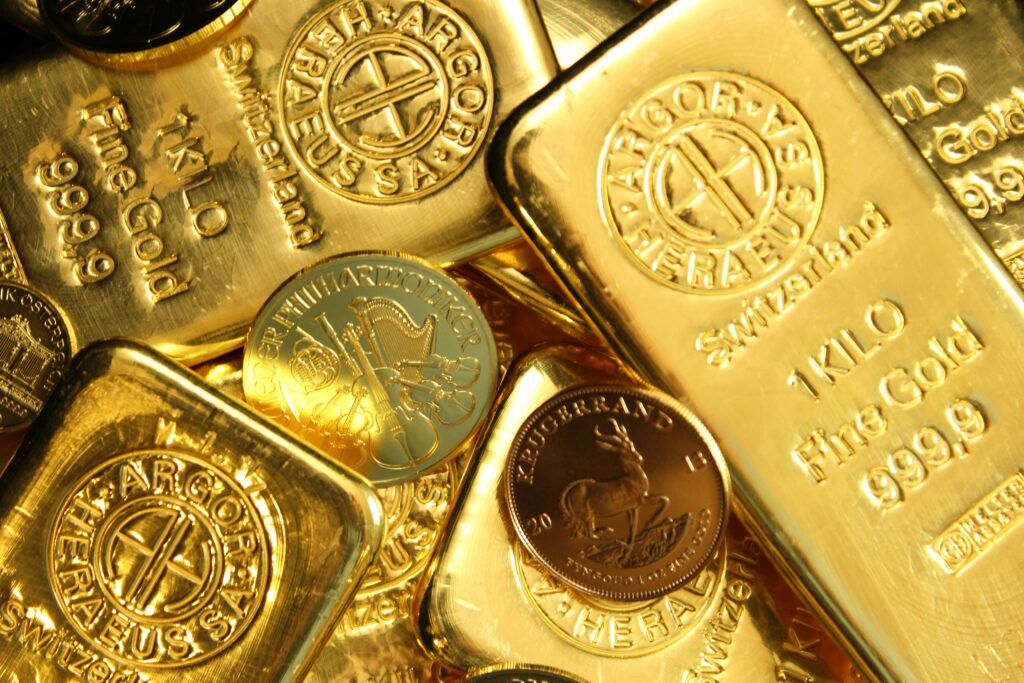
For thousands of years, gold has held a unique place in human society. From ancient kingdoms to modern financial markets, gold has consistently been seen as a symbol of wealth, security, and stability. Even today, in a world filled with digital payments, stock markets, online trading, and cryptocurrencies, gold remains one of the most trusted assets. But why is gold so special? How did it become so valuable, and why do people continue to rely on it even when we already have currency notes and online banking?
To understand this, we must look at history, economics, psychology, and the physical properties of gold itself.
The Historical Journey of Gold
Gold has been used as a form of money and value storage for at least 5,000 years. Ancient civilizations such as Egypt, Mesopotamia, and the Indus Valley used gold to create jewelry, religious artifacts, and trade goods. The Egyptians even believed gold was the “flesh of the gods.”
The reason gold became globally recognized is simple:
-
It was rare but not too rare.
-
It did not rust or decay.
-
It could be melted, shaped, and carried easily.
As trade expanded across continents, gold became a universal medium of exchange. A gold coin in India could be easily traded in Rome or China. No other material had such worldwide acceptance.
This global trust is one of the main reasons gold is still valuable today.
Gold and the Birth of Money
Before paper currency existed, people used coins made from precious metals. Kings and empires stored gold as proof of wealth and power. Later, as economies grew more complex, carrying heavy gold coins became inconvenient. That’s when banks began issuing paper notes representing gold kept in storage.
This was known as the Gold Standard.
For example:
If a paper currency note said 100 units, it meant the bank held a fixed amount of gold that could be claimed upon demand.
This system lasted a long time and helped stabilize global trade.
The End of the Gold Standard
In the 20th century, governments began printing more money than they had gold. Wars, growth needs, and inflation pressures forced countries to abandon the gold standard. The United States officially ended gold-backed currency in 1971.
From that point onwards, currency no longer had intrinsic value.
Its value came only from trust in the government that issued it.
This makes currency “Fiat Money”, meaning its value exists only because people and governments agree it has value.
And here lies the key difference:
Gold has real, intrinsic value. Currency has assigned value.
Why Gold Is Still Trusted Today
Even though modern economies run on digital money and financial systems, gold continues to act as a safe asset — especially during uncertain times.
Here’s why:
1. Gold is Limited
Gold cannot be printed or produced in unlimited quantity. It is mined slowly and exists only in limited supply on Earth. Currency, however, can be printed anytime the government wants.
When more currency is printed:
-
Value decreases
-
Inflation rises
-
Savings become weaker
Gold protects against this because its supply remains stable.
2. Gold Never Loses Its Basic Value
Gold does not depend on governments, banks, or corporations. It cannot default or go bankrupt. Even if economies crash, gold retains value.
This is why people buy gold during:
-
Recessions
-
Financial crises
-
War
-
Political instability
3. Gold is Recognized Everywhere
You can take gold to any country in the world, and it will be valued. Meanwhile, currencies fluctuate in strength, and some even collapse.
For example:
-
Zimbabwe’s currency lost 99% of its value.
-
Venezuelan money became almost worthless.
-
Some countries had to replace their currency entirely.
But gold remained gold, everywhere.
4. Gold Works as a Long-Term Store of Wealth
If you compare gold to currency over decades, the difference is clear:
-
Gold maintains purchasing power.
-
Currency loses purchasing power due to inflation.
Example:
100 grams of gold 30 years ago could buy a piece of land.
Today, 100 grams of gold still can.
But the value of currency in the same period has fallen drastically.
Why Gold Became “Big” in Modern Markets
In the modern financial world, gold is more than jewelry. It is bought and sold in global markets, similar to stocks. Governments, large institutions, and central banks store gold in their reserves.
Countries like the USA, China, Germany, and India hold thousands of tons of gold.
This gold acts as a backup security for their economy.
As the world becomes more uncertain due to inflation, wars, or market volatility, investors move money to gold because it is considered the “safe haven asset.”
Gold vs Currency: A Simple Comparison
| Feature | Gold | Currency |
|---|---|---|
| Supply | Limited & difficult to produce | Can be printed anytime |
| Value Nature | Intrinsic (natural value) | Assigned (depends on trust) |
| Durability | Never rusts, lasts forever | Paper notes wear out and get replaced |
| Stability | Stable over centuries | Fluctuates and loses value over time |
| Global Acceptance | Accepted universally | Accepted only within its issuing country |
This comparison shows why gold remains powerful even today.
Gold in Daily Life: Cultural & Emotional Value
Beyond money, gold has emotional and cultural meaning. In weddings, festivals, and gifts, gold represents:
-
Prosperity
-
Respect
-
Blessing
-
Security
In India especially, gold is not just an investment — it is tradition and pride. Families believe gold ensures safety in difficult times.
And historically, this has proven true.
Gold in the Future
Even though cryptocurrencies, digital wallets, and high-tech financial systems are rising, gold will likely continue to hold its position as:
-
A hedge against inflation
-
A backup in economic uncertainty
-
A long-term store of value
Technology may evolve, but human trust in gold has been built over thousands of years. It is not easy to replace.
Conclusion
Gold became valuable because of its rarity, beauty, and physical qualities. Over centuries, it grew into a universal symbol of wealth and the backbone of global trade. Even today, gold is trusted more than currency because:
-
It cannot be printed
-
It holds stable value
-
It is recognized globally
-
It protects wealth during uncertainty
While currency depends on government policies and economic stability, gold stands independent of everything.
That is why gold has remained valuable for ages and will likely continue to be so for centuries ahead.