
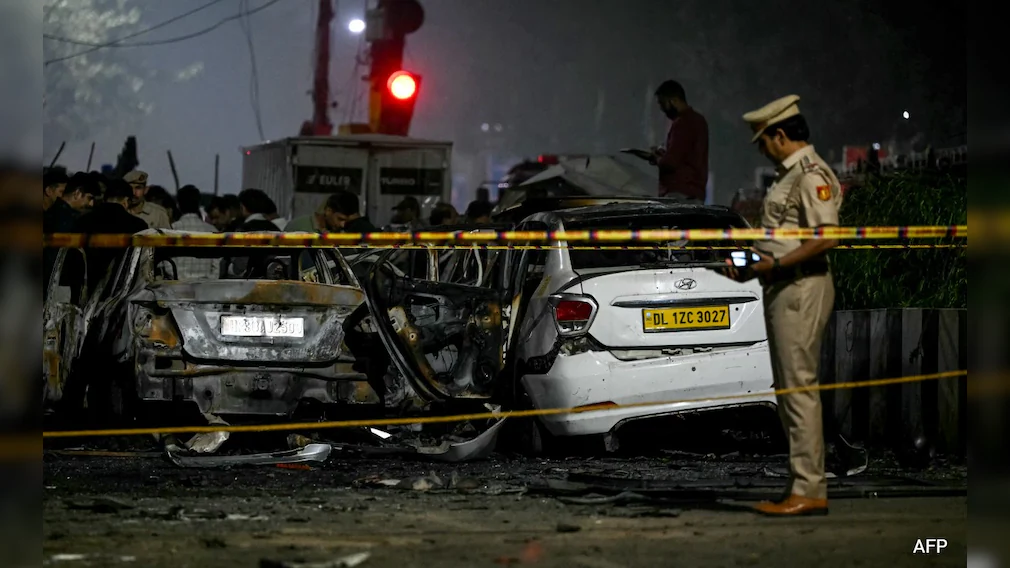
Terrorism in India is not a new phenomenon. For decades, India has faced threats from extremist groups operating within and outside its borders. From the 1993 Mumbai blasts, the 2001 Parliament attack, the 26/11 Mumbai attack, to recent incidents in Jammu & Kashmir, militant violence has repeatedly tried to destabilize the country. But why does India face so many terrorist attacks, especially compared to many other nations?
To understand this, we need to look at history, geography, politics, and ideology.
1. The Geopolitical Position of India
India is located in a region surrounded by multiple politically unstable or conflict-ridden nations. Two of India’s neighbors — Pakistan and Afghanistan — have been home to militant training camps for decades.
-
Pakistan has openly supported extremist groups as part of its strategy to counter India, especially in Kashmir.
-
Afghanistan, after decades of war, has often become a safe haven for radical organizations like the Taliban and Al-Qaeda.
This proximity to global terror networks makes India a natural target.
2. The Kashmir Conflict: A Major Root of Terror Recruitment
The Kashmir dispute has been one of the most intense territorial conflicts since 1947. Pakistan uses terrorism as a tool of proxy warfare to weaken India without entering direct conventional war.
Key Facts:
-
Pakistan’s intelligence agency ISI has funded and trained groups like Lashkar-e-Taiba (LeT), Jaish-e-Mohammad (JeM), and Hizbul Mujahideen.
-
These groups carry out attacks specifically to:
-
Destabilize the region
-
Create fear among citizens
-
Prevent peace-building efforts
-
India’s strong stance on Kashmir and its integration into the Indian Union makes it a constant strategic target for Pakistan-backed terror outfits.
3. Religious Radicalization and Extremist Ideologies
Some terrorist organizations operate based on radical interpretations of religion, where violence is justified in the name of “jihad” or “holy war.”
These groups use:
-
Misinterpretation of religious texts
-
Online propaganda
-
Youth brainwashing
-
Funding from Middle Eastern radical networks
The aim is to create division within India, which is known for its diversity and secular fabric. Terrorists believe that internal conflict will weaken national unity.
4. Internal Security Challenges
India is the second-largest population in the world with vast urban and rural landscapes. Protecting every region from infiltrators is a challenging task.
-
Porous borders in regions such as Jammu & Kashmir, Punjab (in the past), West Bengal, Assam, and Nepal-Bihar region make illegal crossings easier.
-
Terrorist sleeper cells often rely on:
-
Local support networks
-
Fake identity documents
-
Illegal hawala funding channels
-
This makes counter-terrorism extremely complex.
5. Influence of International Politics
Global power struggles influence terrorism in India. For example:
-
During the Cold War, the U.S. and Pakistan allied against the Soviet Union in Afghanistan. Pakistan received weapons, money, and strategic support — some of which later strengthened terror groups.
-
China and Pakistan maintain a strategic alliance, often aligned against India.
-
Nations that have their own political interests sometimes avoid condemning Pakistan-based terror organizations.
This indirect international support allows terrorist groups to survive and rebuild, even after Indian military operations.
6. Social Media & Digital Radicalization
With the rise of the internet, terrorism has entered a new era.
Extremist groups now use:
-
Encrypted messaging apps
-
Dark web platforms
-
Propaganda videos
-
Gaming chats & online communities
They easily target:
-
Discontented youth
-
People with emotional or psychological struggles
-
Young individuals seeking identity or belonging
Digital radicalization is becoming one of India’s biggest future security challenges.
7. Economic Motivation Behind Terrorism
Terrorism is not just ideological — it is also a business.
-
Illegal drug smuggling
-
Arms trafficking
-
Human trafficking
-
Fake currency circulation (notably from Pakistan before demonetization)
Funds generated from these activities are used to finance attacks. Some terrorist leaders earn millions through these networks while manipulating innocent youth to die for their cause.
8. India’s Growth Threatens Hostile Powers
India is rising in:
-
Economic power
-
Global diplomacy
-
Technology and defense capability
Some foreign powers see India as a strategic competitor. Supporting instability inside India is a tactic to slow down progress.
A strong India with unity and internal security threatens their influence in Asia.
9. Despite Attacks, India Has Strongly Responded
India has not remained silent. Several important steps have been taken:
| Year | Action Taken | Purpose |
|---|---|---|
| 2016 | Surgical Strikes in PoK | Destroyed terror launch pads |
| 2019 | Balakot Airstrike | Eliminated JeM training camps |
| 2020+ | Stronger border monitoring & drone defenses | Reduced infiltration |
| Ongoing | NIA (National Investigation Agency) operations | Dismantling terror funding networks |
Additionally, the revocation of Article 370 in 2019 led to:
-
Decrease in organized terror groups in Kashmir
-
Increase in border control
-
Reduced influence of separatist groups
Conclusion: The Fight Against Terrorism is Long, but India is Strong
India’s struggle with terrorism is deeply connected to:
-
Historical conflicts
-
Geopolitical rivalries
-
Religious radicalization
-
Global power politics
However, what stands out is India’s resilience.
Despite numerous attacks, India has:
-
Strengthened defense capabilities
-
Improved intelligence networks
-
Maintained national unity
Terrorism aims to spread fear and division, but India continues to grow — economically, culturally, politically, and globally.
The message is clear:
Terrorism can shake us, but it cannot break us.