Why Is India Heating Up So Much? 10 Proven Ways to Stay Safe from Heatwaves in 2025
Introduction
I am writing this article sitting in Indore, where the temperature outside is touching 44°C today. The fan is running at full speed, the cooler is on, and still the heat feels unbearable. If you are reading this from any part of India right now, I am sure you know exactly what I am talking about.
India’s heatwaves have become more intense, more frequent, and more dangerous than ever before. In 2025, cities across Rajasthan, Madhya Pradesh, Uttar Pradesh, Delhi, and Maharashtra are recording temperatures above 45°C — numbers that were rarely seen even 20 years ago.
But why is this happening? And more importantly — how can you and your family stay safe?
In this article, I will explain exactly why India is heating up so much, and give you 10 practical, proven solutions to protect yourself from deadly heatwaves.
Why Is India Heating Up So Much? The Real Reasons
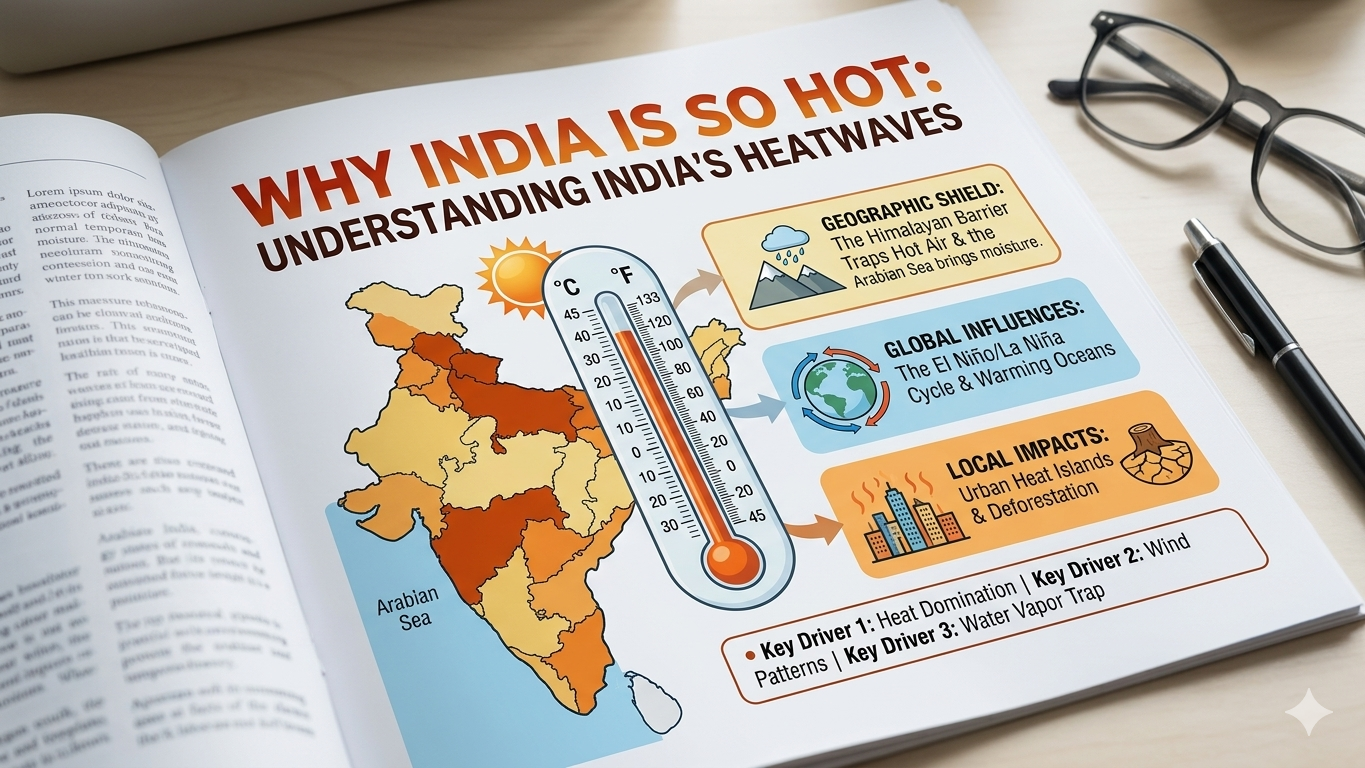
1. Climate Change and Global Warming
The biggest reason behind India’s extreme heat is global warming caused by climate change. Over the last 100 years, the average temperature of Earth has risen by approximately 1.1°C. This may sound small, but in terms of weather patterns, it is enormous.
India is particularly vulnerable because of its geographic location in the tropical zone. As greenhouse gases like CO2 and methane trap more heat in the atmosphere, India absorbs more solar radiation than cooler countries near the poles.
According to the India Meteorological Department (IMD), the number of heatwave days in India has increased by 30% over the last two decades. Cities like Delhi, Jaipur, Nagpur, and Bhopal now regularly cross 45°C in May and June.
2. Rapid Urbanization and Concrete Jungles
Walk through any Indian city today — Mumbai, Delhi, Bangalore, Indore — and you will notice one thing. Concrete everywhere. Buildings, roads, flyovers, parking lots. Very few trees.
This creates what scientists call the Urban Heat Island Effect. Concrete and asphalt absorb heat during the day and release it slowly at night, making cities significantly hotter than surrounding rural areas.
Studies show that urban areas in India are now 3°C to 5°C hotter than nearby villages. This means if a village outside Indore records 40°C, the city itself might be touching 44-45°C.
3. Destruction of Forests and Green Cover
India has lost millions of hectares of forest cover over the last 50 years due to agriculture expansion, mining, and construction. Forests act as natural air conditioners — they absorb CO2, release oxygen, and keep the surrounding area cool through a process called transpiration.
When forests disappear, the land heats up faster. States like Madhya Pradesh, Chhattisgarh, and Jharkhand, which once had dense forests, are now experiencing more intense heat than before.
4. Reduced Rainfall and Changing Monsoon Patterns
India’s monsoon has become increasingly unpredictable. Some years bring floods, other years bring drought. The pre-monsoon period — March to June — has become dramatically hotter as a result.
Without adequate rainfall, the soil becomes dry. Dry soil heats up much faster than moist soil. This creates a feedback loop — less rain means hotter temperatures, and hotter temperatures mean less effective rainfall.
5. El Niño Effect
In 2023 and 2024, the El Niño weather phenomenon significantly impacted India’s climate. El Niño causes warmer than normal sea surface temperatures in the Pacific Ocean, which disrupts weather patterns across Asia.
During El Niño years, India typically experiences weaker monsoons and higher temperatures. The effects of recent El Niño cycles are still being felt across the country in 2025.
6. Air Pollution Creating a Heat Blanket
India is home to some of the world’s most polluted cities. The thick layer of smog and particulate matter above Indian cities acts like a blanket, trapping heat close to the ground and preventing it from escaping into the atmosphere.
This pollution-heat combination makes Indian summers particularly dangerous. Not only is the temperature high, but the air quality is poor, making breathing difficult during peak heat hours.
The Human Cost of India’s Heatwaves
Before I share the solutions, let me give you some numbers that show how serious this problem is.
According to government data, India recorded over 700 heatwave-related deaths in 2023 alone. However, experts believe the actual number is much higher, as many heat-related deaths are recorded under other causes.
The most vulnerable groups are:
- Elderly people above 65 years
- Outdoor workers — farmers, construction workers, street vendors
- Children below 5 years
- People with chronic illnesses — diabetes, heart disease, kidney problems
- People without access to fans or coolers
Understanding this, let us now look at 10 proven ways to protect yourself and your family.
10 Proven Ways to Stay Safe from Heatwaves in India
Solution 1 — Stay Hydrated — Drink More Than You Think You Need
The single most important thing you can do during a heatwave is drink water. Not just when you feel thirsty — but regularly throughout the day.
During extreme heat, your body loses water rapidly through sweat. If you do not replace this water, you risk dehydration, which can quickly become life-threatening.
Practical tips:
- Drink at least 3-4 litres of water daily during heatwaves
- Carry a water bottle everywhere you go
- Drink ORS (Oral Rehydration Solution) if you feel dizzy or weak
- Eat water-rich fruits like watermelon, cucumber, mango, and oranges
- Avoid alcohol and excessive caffeine — they dehydrate you faster
Solution 2 — Avoid Going Outside Between 11 AM and 4 PM
The sun is most dangerous between 11 AM and 4 PM. During these hours, UV radiation is at its highest and temperatures peak.
If possible, complete all outdoor work before 10 AM or after 5 PM. This simple change can dramatically reduce your risk of heat stroke.
If you must go outside, wear loose, light-coloured cotton clothing, carry an umbrella, and always carry water.
Solution 3 — Use Wet Cloth on Your Head and Neck
This is an old Indian remedy that actually works scientifically. Placing a wet cloth on your forehead, neck, or wrists helps cool your blood temperature quickly.
Your neck and wrists have major blood vessels close to the skin. Cooling these areas sends cooler blood to your brain and vital organs. This is why people who work outdoors in rural India often wrap a wet towel around their neck.
Solution 4 — Wear the Right Clothing
During heatwaves, clothing choice matters more than most people realize.
Best choices:
- Loose cotton clothes in white or light colours
- Full sleeve shirts (counterintuitively, they protect from direct sun better than sleeveless)
- Cotton dupatta or stole over head and shoulders
- Avoid synthetic fabrics — they trap heat and prevent sweating
Worst choices:
- Dark coloured clothing (absorbs more heat)
- Tight synthetic clothes
- Black or navy blue colours in direct sunlight
Solution 5 — Know the Signs of Heat Stroke — It Can Kill
Heat stroke is a medical emergency. Unlike heat exhaustion, which is uncomfortable but manageable, heat stroke can cause permanent brain damage or death within hours if untreated.
Signs of heat stroke:
- Body temperature above 104°F (40°C)
- Hot, dry skin (no sweating even in heat)
- Confusion or unconsciousness
- Rapid heartbeat
- Severe headache
What to do immediately:
- Move the person to a cool, shaded area
- Pour cold water on their body
- Apply ice packs to neck, armpits, and groin
- Call emergency services immediately
- Do NOT give water to someone who is unconscious
Solution 6 — Keep Your Home Cool Without AC
Not everyone has access to air conditioning. Here are practical ways to keep your home cooler:
- Close windows and curtains during the day to block direct sunlight
- Open windows at night when temperature drops
- Use wet curtains or khus (vetiver) screens — traditional and effective
- Place bowls of ice in front of fans
- Sleep on lower floors — heat rises, so upper floors are hotter
- Plant trees and creepers outside windows for natural shade
Solution 7 — Eat Light and Cooling Foods
What you eat during a heatwave directly affects how your body handles heat.
Best foods during heatwave:
- Curd and lassi — cooling and hydrating
- Raw mango panna — traditional heat remedy
- Coconut water — natural electrolytes
- Cucumber raita
- Sattu drinks — popular in Bihar and UP
- Light dal and vegetable meals
Foods to avoid:
- Heavy fried foods
- Spicy foods — increase body heat
- Large meat-heavy meals
- Excessive tea and coffee
Solution 8 — Check on Elderly Relatives and Neighbours
Elderly people are extremely vulnerable to heat. Many live alone and may not realize they are becoming dangerously dehydrated or overheated.
Make it a habit during heatwave warnings to check on:
- Elderly parents and grandparents
- Neighbours living alone
- People without fans or coolers
A simple phone call or visit can save a life.
Solution 9 — Follow IMD Heatwave Alerts
The India Meteorological Department (IMD) issues heatwave warnings through several channels. Make sure you follow these:
- Download the Mausam app by IMD
- Follow IMD on Twitter/X for real-time updates
- Enable weather alerts on your phone
- Listen to local radio and news during heatwave season
A heatwave alert means temperatures are expected to exceed 40°C in plains or 30°C in hilly areas. A severe heatwave means temperatures 6.4°C above normal.
Solution 10 — Take Community Action — Plant Trees
Individual solutions are important, but long-term protection from heatwaves requires community action. The most powerful thing communities can do is plant trees.
Trees provide shade, release moisture through transpiration, and can reduce local temperatures by 2-3°C. Organizations like the Forest Department, municipal corporations, and NGOs regularly organize tree planting drives.
You can also:
- Plant trees in your neighborhood or colony
- Join local environment groups
- Support policies that protect forests
- Reduce your own carbon footprint — use public transport, save electricity
Frequently Asked Questions (FAQ)
Q: Which Indian cities are most affected by heatwaves? A: Rajasthan (Churu, Barmer, Jaisalmer), Madhya Pradesh (Gwalior, Datia, Khajuraho), Delhi, Uttar Pradesh (Banda, Allahabad), Vidarbha region of Maharashtra, and Odisha are typically the most heatwave-prone areas in India.
Q: What is the difference between heat exhaustion and heat stroke? A: Heat exhaustion causes heavy sweating, weakness, and dizziness but the person remains conscious. Heat stroke is more dangerous — the body stops sweating, temperature rises dangerously, and the person may lose consciousness. Heat stroke requires immediate emergency treatment.
Q: Are heatwaves getting worse in India? A: Yes. According to climate scientists, India will experience more frequent and more intense heatwaves as global temperatures continue to rise. By 2050, parts of India may experience conditions that are dangerous for human survival without cooling systems.
Q: What is the best drink during a heatwave? A: Plain water is best. ORS (Oral Rehydration Solution), coconut water, and traditional drinks like aam panna and sattu are also excellent. Avoid alcohol, sugary sodas, and excessive caffeine.
Q: Can a ceiling fan prevent heat stroke? A: Fans help when temperatures are below 35°C by promoting sweat evaporation. However, when temperatures exceed 40°C, fans may actually increase heat stress by blowing hot air. In extreme heat, wet clothing or moving to a cooler location is more effective than fans alone.
Conclusion
India’s heatwaves are a serious and growing threat. As someone living in India, I see the effects every summer — the scorching afternoons, the power cuts when demand spikes, the news reports of heatwave deaths.
But we are not helpless. By understanding why temperatures are rising and taking practical steps to protect ourselves and our communities, we can significantly reduce the harm caused by these extreme heat events.
Stay hydrated, stay indoors during peak hours, look after your elderly neighbours, and plant a tree this monsoon season. These small actions, multiplied across millions of Indians, can make a real difference.
Stay safe this summer. 🙏
Did you find this article helpful? Share it with your family and friends on WhatsApp — it could save a life!
For more articles about health, lifestyle, and world affairs, visit gyaanhubb.com